One of the easiest ways to get stuck is to believe that one bad decision has ruined everything. You oversleep, skip the gym, eat something you did not plan, have a rough day at work, get into an argument, or simply feel unmotivated, and suddenly your brain starts telling you that the whole day is a failure.
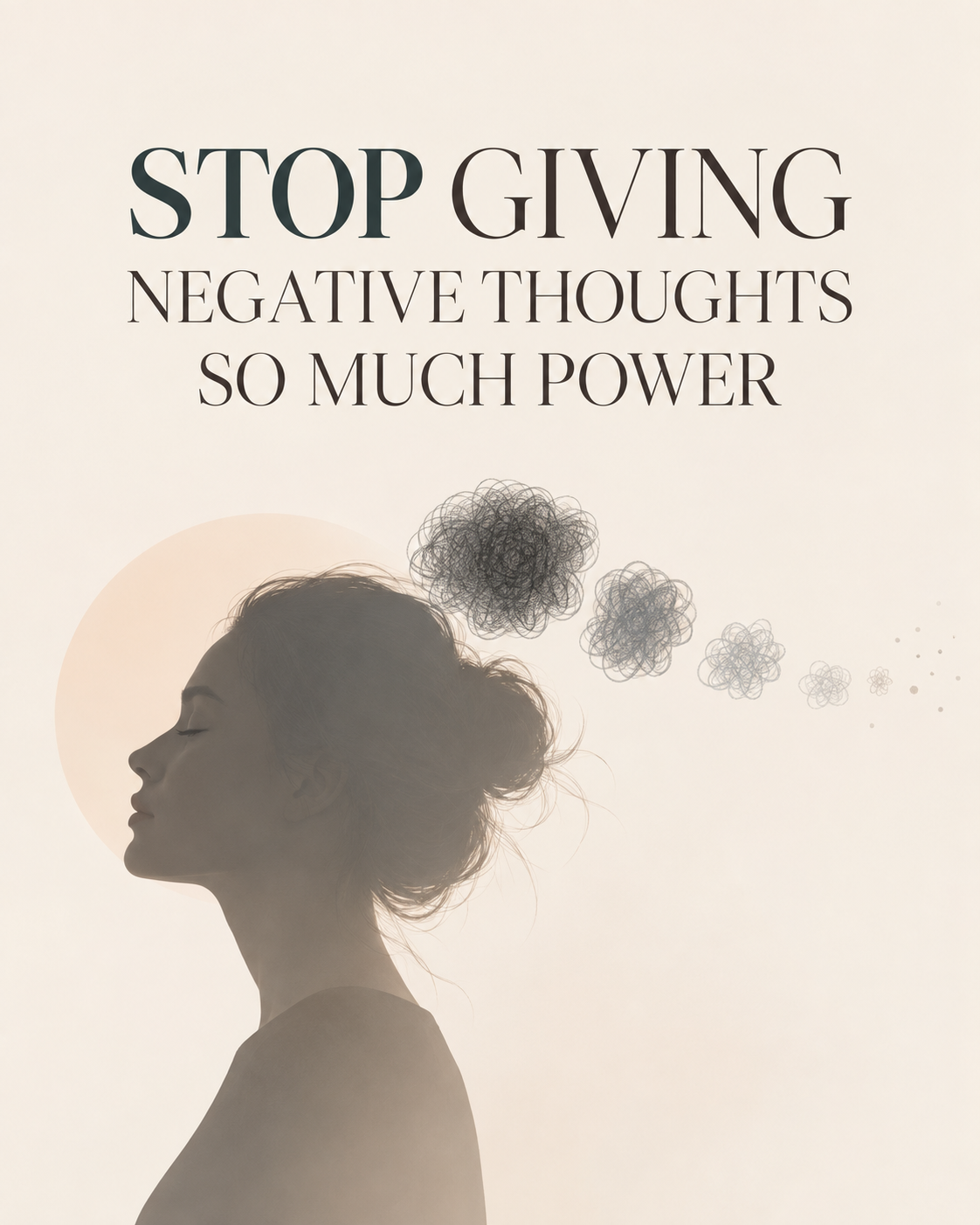
That kind of thinking is often called all-or-nothing thinking. Instead of seeing one difficult moment as one difficult moment, we turn it into evidence that everything is off track. Then we make choices based on that belief. We skip the next workout too. We stop trying to eat well. We procrastinate. We tell ourselves we will start again on Monday.
The problem is not usually the original mistake. The problem is the story we build around it.
One missed workout will not erase your progress. One unhealthy meal will not destroy your health. One bad night of sleep does not mean the entire week is ruined. One difficult conversation does not mean every relationship in your life is failing.
The healthier response is to shrink the problem back down to its actual size.
Instead of saying, “I messed everything up,” try saying, “That did not go the way I wanted. What can I do next?”
That question matters because your next decision is often more important than your last one.
You do not need to wait for the perfect time to reset. You do not need a new week, a new month, or a new year. You can reset at lunch. You can reset at 3:00 in the afternoon. You can reset after one bad conversation. You can reset after one missed workout.
A reset does not need to be dramatic.
It can be as simple as drinking some water, going for a walk, making one healthier meal, completing one task, apologizing, turning your phone off, going to bed on time, or simply deciding not to keep punishing yourself for something that already happened.
This is where self-compassion becomes useful. Self-compassion does not mean letting yourself off the hook for everything. It means being able to acknowledge a mistake without turning it into an attack on your identity.
There is a big difference between saying, “I made a choice I am not happy with,” and saying, “I am a failure.”
One describes behavior.
The other turns behavior into identity.
The more you practice separating the two, the easier it becomes to recover from setbacks.
Consistency is not about being perfect every day. It is about returning to your values more often than you abandon them. People who make progress are not people who never have bad days. They are people who learn how to recover faster.
That is the real skill.
Do not focus only on avoiding mistakes. Focus on shortening the amount of time it takes you to get back on track.
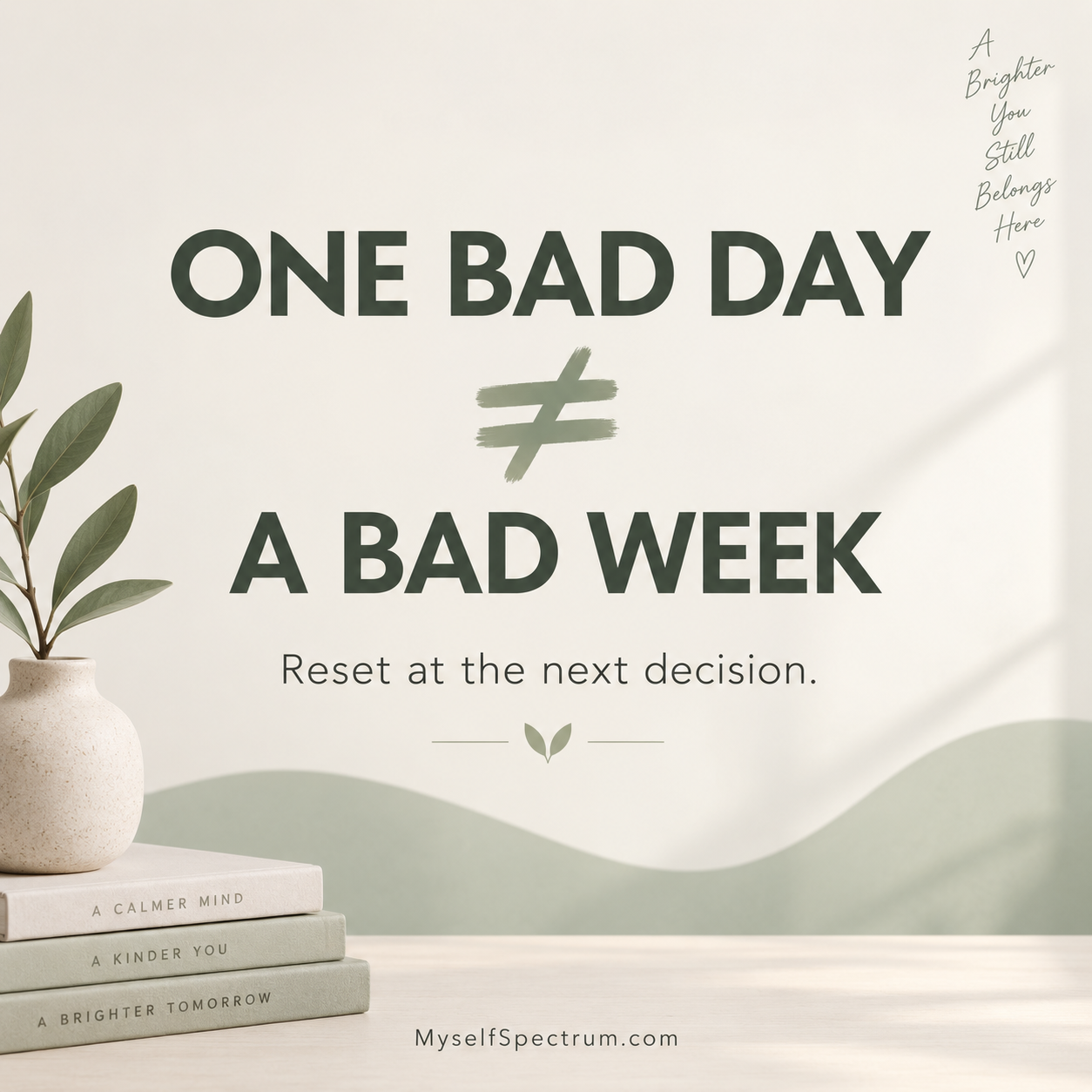
One bad day does not need to become a bad week.
One bad week does not need to become a bad month.
And one difficult moment does not have to define who you are.
Stop giving one bad day so much power.
You do not need to earn your way back on track.
You just need to make the next choice a little better.
For more mental health and wellness tools, visit MyselfSpectrum.com.