For many LGBTQ+ people, coming out is supposed to be the beginning of freedom.
After years of hiding, pretending, and wondering whether you’ll ever be accepted, you finally find a community where you hope you’ll belong.
But for some people, that freedom comes with a new kind of pressure.
The pressure to be more attractive.
More muscular.
More successful.
More sexually desirable.
More social.
More exciting.
The pressure to become someone else’s definition of enough.
The Validation Trap
We all want to be accepted.
That’s human.
But somewhere along the way, acceptance can quietly become validation. And validation becomes addictive.
It starts innocently.
You lose a little weight.
People notice.
You gain muscle.
You get more attention.
You post a shirtless photo.
The likes pour in.
You download another dating app.
Your confidence rises with every match.
It feels good.
Until it doesn’t.
Because eventually your self-worth becomes dependent on people who don’t actually know you.
You begin measuring your value by strangers’ opinions, messages, compliments, or whether someone chooses you for one night.
That’s an impossible standard to live by.
When Coping Starts Looking Like Confidence
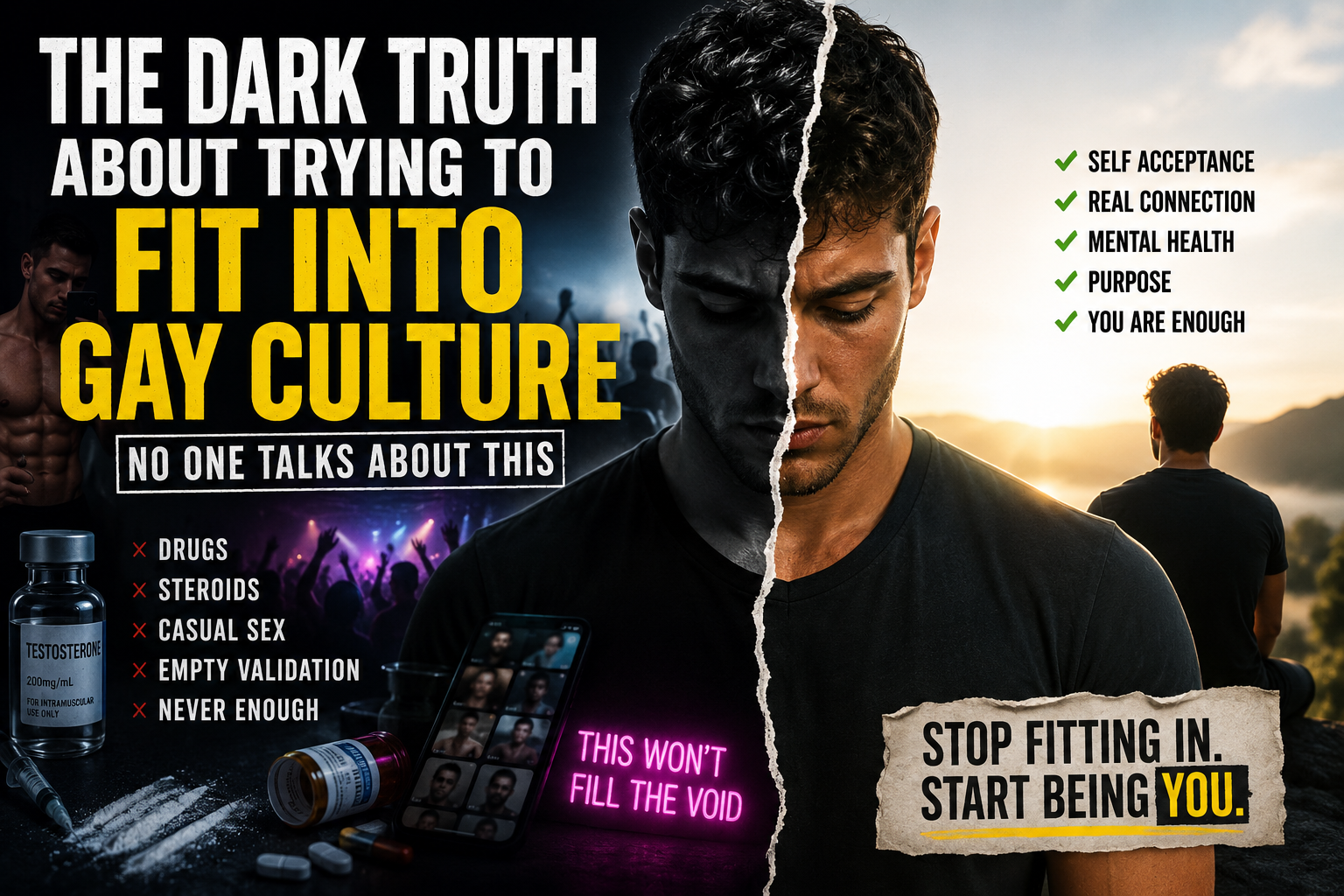
Not everyone experiences this, but for some people, the pressure to fit in leads to behaviors that temporarily ease deeper emotional pain.
Some turn to drugs because they make socializing easier.
Some use steroids because they believe their body is the only thing standing between them and love.
Some chase endless casual sex hoping that physical intimacy will quiet emotional loneliness.
Others become consumed by status, appearance, expensive clothes, exclusive parties, or carefully curated social media lives.
None of these things are inherently wrong on their own.
The important question is why.
Are you doing them because they genuinely bring you joy?
Or because you’re afraid of who you’d be without them?
The Body Will Never Heal What the Mind Is Asking For
One of the cruelest lies we tell ourselves is:
“Once I look better, I’ll finally be happy.”
Then you reach the goal.
And suddenly there’s another one.
Another five pounds.
Another cosmetic procedure.
Another cycle.
Another injection.
Another weekend.
Another person to impress.
The finish line keeps moving because the problem was never your appearance.
It was your relationship with yourself.
You cannot build lasting self-worth on temporary approval.
The Loneliness We Don’t Talk About
One of the greatest paradoxes is that someone can be surrounded by people every weekend and still feel profoundly alone.
You can have hundreds of matches.
Thousands of followers.
An active social life.
And still feel unseen.
Because being desired isn’t the same thing as being known.
Being wanted isn’t the same thing as being loved.
And attention isn’t the same thing as connection.
Real connection asks for vulnerability.
It asks us to let someone know who we are beneath the body, beneath the confidence, beneath the performance.
That can be terrifying.
But it’s also where healing begins.
You Don’t Have to Earn Your Worth
There is absolutely nothing wrong with taking care of yourself.
Go to the gym.
Dress well.
Build your career.
Travel.
Have amazing experiences.
Celebrate your sexuality.
Enjoy your life.
The issue isn’t any of those things.
The issue is believing your value depends on them.
You don’t become worthy because you’re attractive.
You don’t become lovable because you have abs.
You don’t become important because strangers desire you.
You already have worth.
The healthier version of self-improvement comes from self-respect—not self-hatred.
One says:
“I love myself enough to become healthier.”
The other says:
“Maybe if I change enough, someone will finally love me.”
Those are completely different journeys.
What Real Pride Looks Like
Real pride isn’t perfection.
It’s authenticity.
It’s learning to stop performing.
It’s choosing friends who celebrate who you are rather than what you look like.
It’s saying no to environments that constantly make you feel inadequate.
It’s protecting your mental health as fiercely as you protect your physique.
It’s building a life that still feels meaningful after the party ends.
Final Thoughts
If any part of this feels familiar, know this:
You are not broken.
You are not behind.
You are not failing.
You are likely responding to pressures that many people experience but few are willing to discuss openly.
The answer isn’t giving up on yourself.
It’s giving up the belief that you have to become someone else before you’re worthy of love.
Your body deserves care.
Your mind deserves peace.
Your heart deserves genuine connection.
And the version of you that is authentic—not perfect—is the one the right people will ultimately be drawn to.
Stop trying to fit into an image that asks you to lose yourself.
Start building a life where you no longer need anyone else’s permission to believe that you’re already enough.