
Stress is unavoidable. Even when life is going well, there are deadlines, responsibilities, difficult conversations, unexpected problems, overstimulation, and days when your brain simply refuses to slow down. The goal is not to build a life where you never experience stress. A much more realistic goal is learning how to recognize when stress is building and having reliable ways to regulate yourself before it begins controlling your mood, behavior, and decisions.
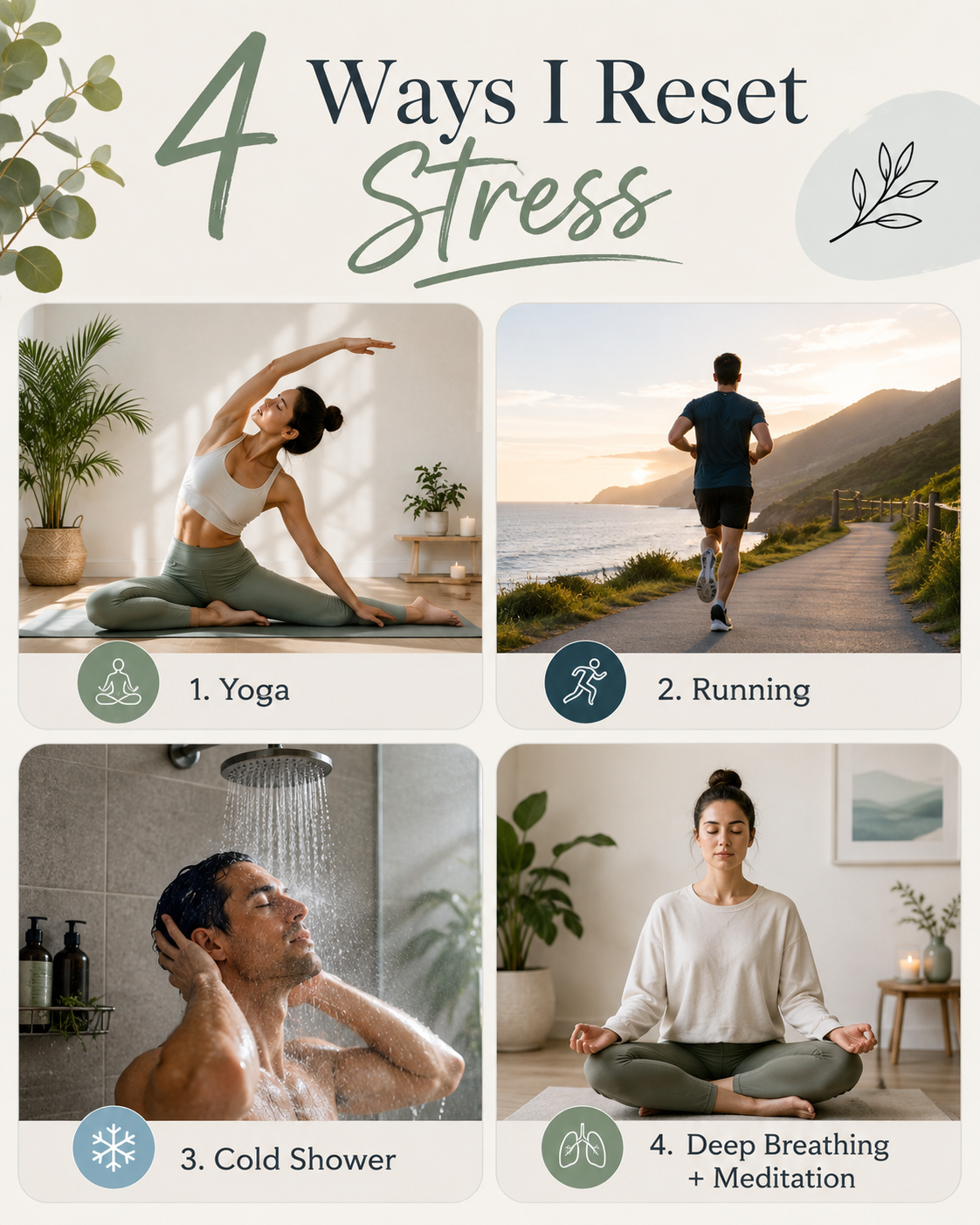
One of the first things I like to do when I feel stressed is yoga. Stress is not just something that happens in your thoughts. It often shows up physically as muscle tension, shallow breathing, restlessness, headaches, tight shoulders, or the feeling that your entire body is bracing for something. Yoga gives me an opportunity to deliberately slow down, pay attention to my body, and move through some of that tension rather than simply sitting with it.
Yoga can also create a natural transition between a stressful part of the day and whatever comes next. Instead of carrying the same physical and emotional activation from one situation into another, even a short yoga session can create a moment of separation. You do not necessarily need an hour-long class. Sometimes a few minutes of controlled movement and stretching can be enough to interrupt the cycle of tension.
The second strategy I use is running. When my mind feels overloaded, movement can be one of the fastest ways to create some distance from whatever I have been thinking about. Running gives my attention somewhere else to go. I can focus on my breathing, my pace, the environment around me, and the physical sensation of moving rather than continuing to replay the same stressful thoughts.
Exercise is also useful because stress often creates a feeling of excess energy. You may feel restless, agitated, or unable to sit still. Instead of fighting that activation, movement gives it an outlet. Running is what works well for me, but the same principle can apply to walking, cycling, swimming, strength training, dancing, or any other form of physical activity you enjoy and can perform safely.
My third reset is a cold shower. Cold exposure is not a magical cure for stress, but it can be a very effective way to change how you feel in the moment. The sensation immediately demands your attention. It becomes much harder to continue obsessing over an email, conversation, or problem when your brain is suddenly focused on cold water hitting your body.
That shift in attention can be useful. A cold shower can make me feel more awake, refreshed, and mentally reset after a difficult workout or stressful day. It is best thought of as one tool rather than a replacement for sleep, exercise, nutrition, therapy, or other healthy coping strategies. The value is often in the immediate change of state and the feeling of having interrupted the stress response.
The final strategy I use is deep breathing and meditation. This is usually where I intentionally stop doing and practice simply being still. When stress is high, breathing often becomes faster and shallower without us even noticing it. Deliberately slowing the breath can help create a sense of calm and give you something concrete to focus on besides whatever is worrying you.
Meditation does not require completely clearing your mind. That expectation often makes people think they are doing it incorrectly. Thoughts are going to appear. The practice is noticing them and then gently bringing your attention back to your breathing, your body, or the present moment. That simple act of redirecting attention is part of the practice.
Deep breathing can also be used almost anywhere. You do not necessarily need a meditation room, special equipment, or twenty uninterrupted minutes. A few slow breaths before walking into a meeting, responding to a difficult message, or going to sleep can create enough space between the stressor and your reaction to help you respond more deliberately.
What I like about these four strategies is that they approach stress from slightly different directions. Yoga helps me slow down and reconnect with my body. Running gives stress a physical outlet. A cold shower creates an immediate shift in state. Deep breathing and meditation help settle my attention and bring me back into the present moment.
Not every strategy will work equally well every day. Sometimes I need movement. Sometimes I need stillness. Sometimes I need to get out of my thoughts completely, and sometimes I need to sit with them long enough to understand what is actually bothering me. The important thing is having more than one option.
It is also worth paying attention to the difference between regulating stress and avoiding it. Exercise, meditation, yoga, and cold exposure can all be healthy ways of managing emotions, but eventually some problems still need to be addressed directly. If a relationship needs a conversation, a deadline requires action, or a boundary needs to be set, stress management should help you become more capable of dealing with the problem rather than becoming another way to avoid it.
The goal is not to become someone who never gets stressed. That is not realistic, and stress itself is not always bad. Stress can motivate us, help us respond to challenges, and signal that something in our lives deserves attention. Problems tend to arise when the stress response stays activated long after the immediate situation has passed.
That is why small resets can be so valuable. They create moments where you intentionally tell your mind and body that they do not have to remain on high alert indefinitely.
You also do not need to wait until you are completely overwhelmed to use these strategies. They can work better when they become part of your routine. A short yoga session in the morning, a run after work, a cold shower after exercise, or five minutes of breathing before bed can function as preventive maintenance rather than emergency interventions.
Over time, the goal is to become more aware of your own early warning signs. Maybe you notice that you become irritable. Maybe your thoughts start racing. Maybe your shoulders tighten. Maybe you begin scrolling endlessly or have trouble concentrating. Those signals can become reminders that it is time to reset before stress gains more momentum.
Stress will continue to show up because life will continue to happen. What can change is how much power you give it.
You may not always be able to control the situation that created the stress, but you can develop skills that help you regulate your response.
For me, yoga, running, cold showers, deep breathing, and meditation are four simple ways to do exactly that.
For more mental health and wellness tools, visit MySelfSpectrum.com.